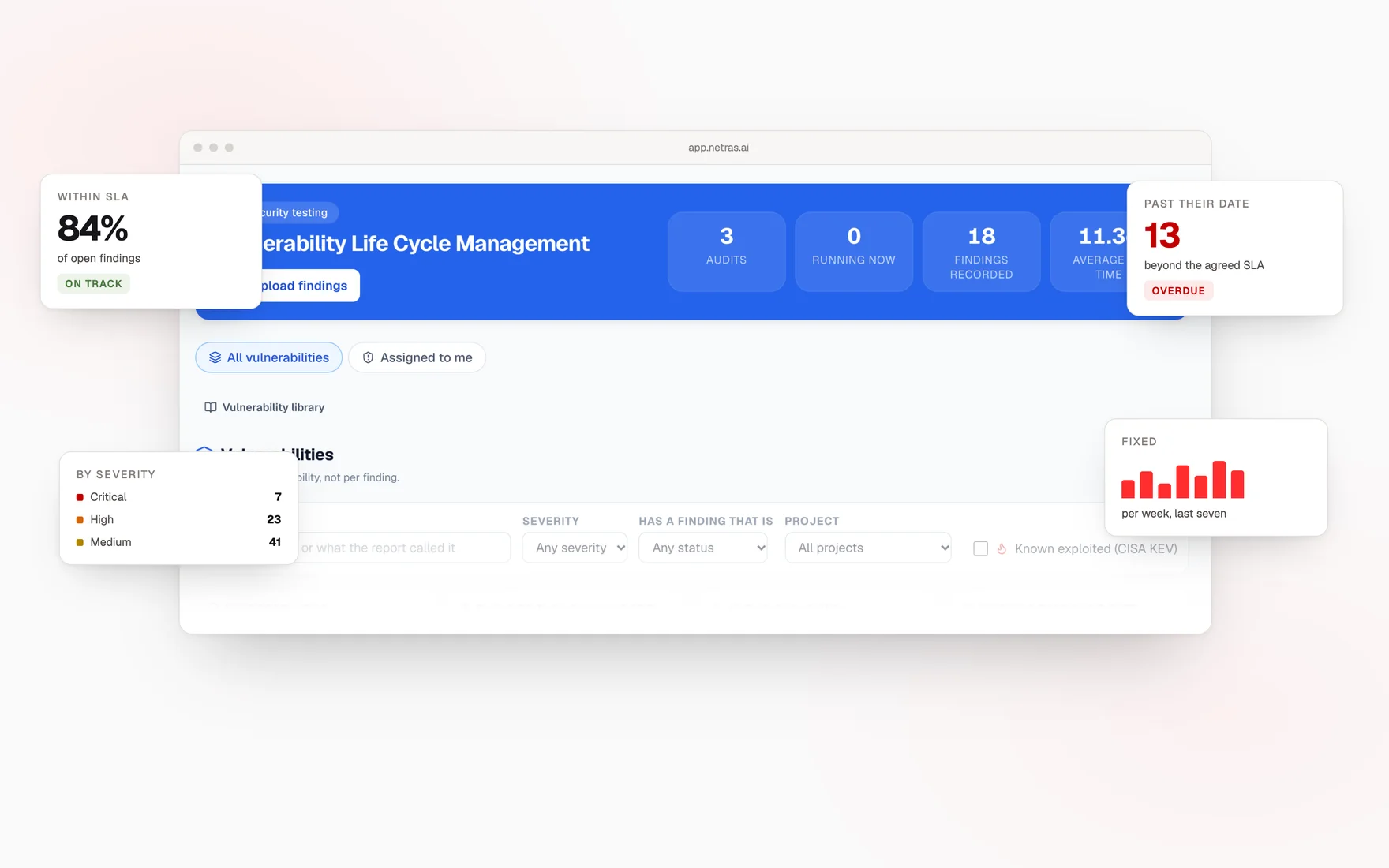
A finding without an owner, a business unit and a date is a row in a spreadsheet. Netras gives every finding all three, applies your SLA policy to it, and shows you the ones that are about to breach rather than the ones that already have.
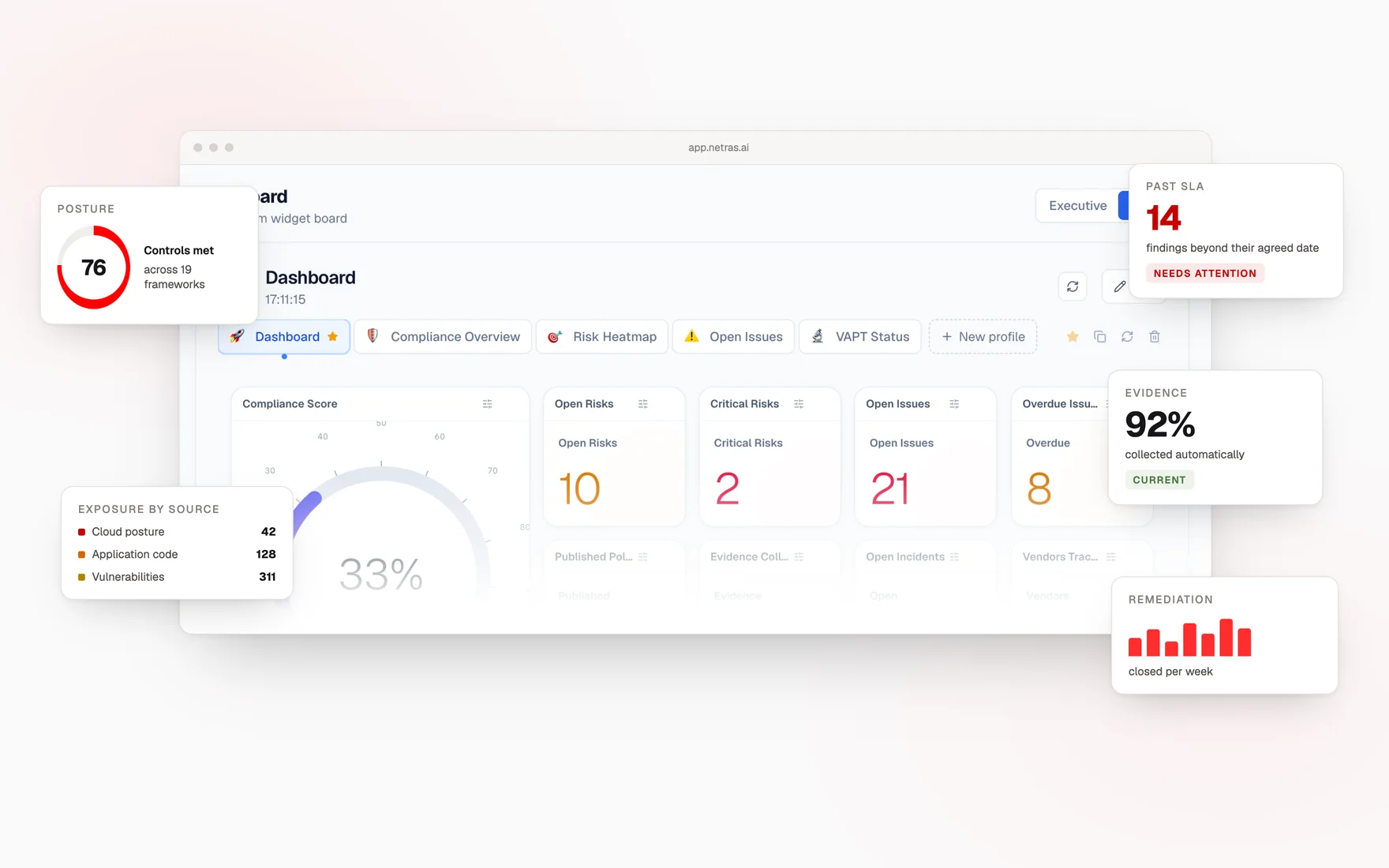
Import, triage, assign, chase, re-test, close, and prove it stayed closed. Each step is a state the finding is actually in, not a label somebody applied by hand.
Scanner output, XLSX and vendor PDF reports, parsed deterministically. No model guesses at your findings, because a hallucinated severity is worse than no import.
Accept, defer or mark a false positive, each with the justification stored. A suppressed finding keeps its history so a later auditor can see who decided and why.
Scoping means a business owner opens the product and sees their estate. It is enforced on the request path, not hidden in the interface.
Days per severity, per environment if you need it. Ageing, burn-down and breach are computed from your policy rather than from a vendor default.
Name a piece of work, scope it once, and chase it to completion across every application it touches. The campaign is the unit people can actually agree to.
Round two of a test matches back to round one even when the vendor has renumbered every finding, so a reopened issue is visible as a regression.
A finding is not created by a scan: it is first seen in one. Netras records which audit first observed an issue and which later ones still saw it, so a finding that survives three rounds reads as a finding that survived three rounds, and not as three findings.
Yes. Import is deterministic parsing of scanner formats, XLSX and vendor PDF reports. If a report cannot be parsed confidently the rows are staged for you to confirm rather than guessed at.
From your policy: days allowed per severity, counted from when the finding was first seen, not from when it was imported. An import of year-old findings shows them as a year old.
Yes, and the scope is enforced server-side on every request. Unit membership and project ownership both grant access, so a project owner outside the unit is not locked out of their own work.
A working demo with your data shape, not a slide deck.